Showing posts with label workout. Show all posts

Thursday, October 22, 2015

Get To Stepping - 2 Stair Set Workouts For Conditioning


 You don't need any expensive equipment, open space, or even great weather to get in an effective conditioning workout. In fact, you can get it done in your own home, apartment, or hotel. All you need is a set of stairs!

 I'm all about a minimalist approach to fitness, and using what's available in your area to your advantage is a part of that approach. Just about every single home will have a set of stairs, why not use those to your advantage? You're not always going to have access to a gym, a track, or equipment. By learning how to use the stairs as a conditioning tool, you'll be eliminating any of those excuses.

  I've been using stair sets for years with clients to elicit outstanding results, and today I'm going to share two of them with you! The methods I'm going to share with you today are not the only way to use stairs for conditioning, they're just a few of the ways I have used them.

 Yes, I know about stair sprints, and so does everyone else! We've all seen Rocky ... so I'm not including them in this.

 The purpose of this post is to get your mind open to the idea of using your stairs for effective conditioning. This way, you'll be able to get in a quality conditioning workout anywhere in the world. Let's take a look at a few different workouts I enjoy.


Fast Feet

It's called fast feet for a reason! This workout is a simple conditioning workout that only involves the use of one step. It's easy, and I often use it with new trainees due to the low difficultly level. That doesn't mean it's not suitable for the experienced trainee! It's going to rev your heart rate up no matter who you are. I enjoy using this after a strength training workout as a finisher.

How it's done ...

- Step up on to the first step, then step down.
- Repeat this as quickly as possible for 20 seconds
- Rest for 10 seconds
- Repeat this 8x
- Each round alternate the foot your using to step up

The goal is to step up and down as fast as you can, and I do mean FAST! Then rest for 10 seconds before repeating. If you have a railing to hold onto during this workout DO IT! If you slip while you're taking a step it will help prevent you from falling on your face!

Variations ...

- 30 seconds of work/30 seconds 4-8x


The Pilgrimage To Pai Mei's

 In old Kung Fu movies, and the Kill Bill series, Pai Mei was a cruel kung fu master who lived on the top of a tall mountain. The only way to make it to Pai Mei, was to walk up a massive stair set ... only to get your ass kicked at the top. This workout is a much slower form of conditioning, but it's fantastic and basic. I use a stair well for this workout, but home stairs will due as well! Longer stair sets (10 - 20) are best, but short sets can work as well. It's going to be a grind, but if done correctly it will have you breathing hard in a short amount of time.

How it's done ...

- You'll start at the bottom of the stairs
- Walk with purpose, full extension of the knee and hip at the top of each step, squeezing the glutes
- Once you reach the top of the flight of stairs, perform 5-10 face the wall squats (posture squats) at a pace of 4 seconds down, 4 seconds up
- Walk up the next flight of stairs (or if at home, walk down the stairs briskly and then back up them with purpose)
- Reach the top of that flight of stairs and perform 5-10 face the wall squats
- Repeat this sequence over and over for 10-20 mins without stopping

 This can be done with a smaller set of steps (5-6 steps) but I would suggest walking up them, back down, then back up, before performing the squats. This could also be done with step as well, step up and then back down on the one step 10 - 20 times before performing your squats. You could also vary the exercises, you don't need to only perform squats. Push ups, chin ups, and lunges, would also be suitable.

Variations ...

- Add a weight vest
- Use a resistance band for added weight during squats


 - Tim


www.TimothyBellFitness.com 


Friday, September 4, 2015

Monday, August 31, 2015

Moving Meditation Through Fitness


 The benefits of regular mediation have been talked about for centuries. A regular practice can help reduce stress/anxiety, improve mental clarity/focus, and maintain cognitive function into later years. It's no secret that some form of meditation would be a great addition to most people's daily routine! Lucky for you, there's no shortage of methods to choose from. You only need to do some research or take a class, practice it often, and see if it's right for you. Simple, easy, and in most cases won't break the bank! 

 Meditation can come in many forms and styles. Popular ones include guided meditation, mindful meditation (popularized by Shaolin Monks), and transcendental mediation (popularized by Hindu Yogi's). Most of these methods involve sitting, kneeling, or laying down in a calm space of your choosing. Their focus can range from channeling your attention on one word/phrase, simply observing your thoughts as they pass though your mind, or even clearing the mind. Not every method of mediation is right for everyone, the one that works for you will be unique to your personality type. 

 That being said, these calm methods of meditation don't always jive with every ones personality.  

 Yes, it takes practice to learn how to sit still and adapt to your meditation practice. It would be worth giving a calm practice a try for a while before you decide if working or not. But what if you've been trying for a while and it's just- not- working? Don't worry, there's another way to get that meditation done without sitting still. 

Moving Meditation 

 The mind and the body are "one", in my opinion for them to function at a high level they must be trained together. This is why I often opt for moving forms of meditation in my daily life instead of tradition calm methods. We've all felt the calm/high state felt after a quality workout, it's almost zen like, and people have known about this forever! This isn't a new phenomenon, we can see many examples of this "moving meditation" throughout history. 

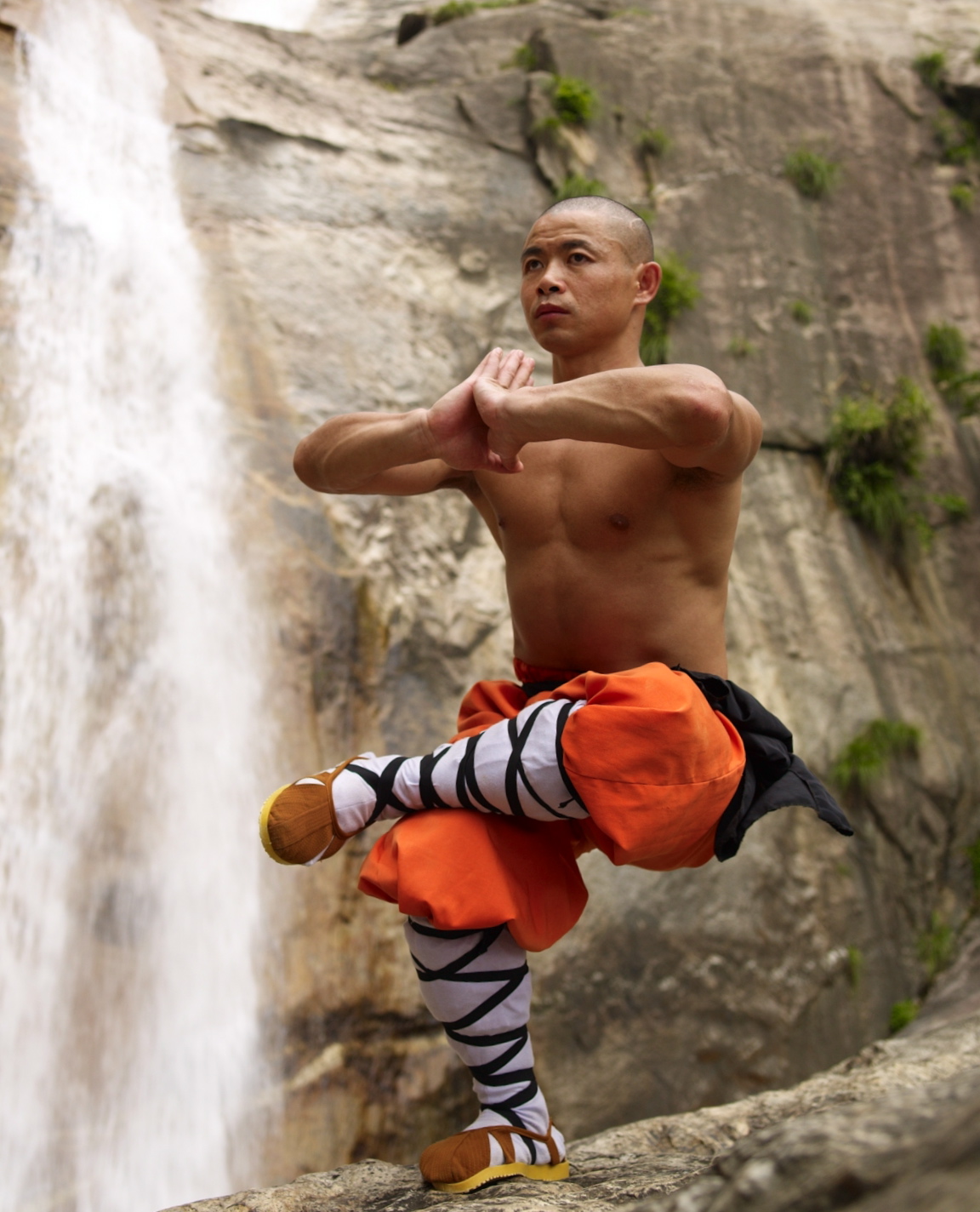
 Shaolin Warrior Monks have practiced this for centuries through Qi Gong. Their practice of Qi Gong allowed them to connect their breath, mind, and movement together in one action; improving the well being physical body as well as their mind. Samurai would train with laser focus on improving sword techniques, hand to hand combat, and even art. Their single minded purpose/focus through their physical practice allowed them to reach a high level of zen; even without sitting for hours each week meditating. It's quite obvious that Yoga is a powerful form of moving meditation! Do I even need to go into more detail on that ... I didn't think so! 


  Even though they're all fun, you don't need to specifically practice Qi Gong, Kendo, or Yoga to work on moving mediation.  It can be as simple as taking a long walk and simply observing your surroundings, calming the mind, and allowing you to recharge. You can also get a quality moving meditation practice through your own training program! Today I'm going to outline my favourite method of moving meditation, achieved through minimalist training. 

Moving Meditation Workout

 The method I'm about to describe is simple, after all, I'm all about bodyweight and minimalist approach to training! You won't need much equipment, just a pull up bar or a suspension trainer/gymnastics rings and your own bodyweight. The goal during this workout is to not count your reps. You can throw the rep counting out the window! I want you to only focus on your form and your breathing. You need to be mindful about the exercise you're performing, focusing only on that movement at that time. It's a high intensity method that will produce a deep level of muscular fatigue, push your heart rate up, and get you breathing hard. Trust me, it's a great workout that will build that "zen" state we talked about earlier.  Here's how to put it together ...

- Choose a variation for each exercise that you can complete at least 10 reps.
- Perform the exercises back to back, in the order listed, with 15 seconds of rest between exercises
- Perform each exercise at a pace of 4 seconds up and 4 seconds down, with a 1 second pause at the top and bottom of the movement.
- Perform as many reps as you can possibly complete with perfect form, at the tempo described!
- Once the form as broken down, or you can no longer move at the temp described, move onto the next exercise.
- Once you completed all the exercises, rest for 1-2 mins and repeat the whole "circuit" again 1-2 more times depending on your fitness level. 

1.) Bodyweight Row or Chin Up/Pull Up variation 
2.) Push Up variation 
3.) Squat variation


 Give this a try and I'm sure you'll find it produces a great calming effect, not only for the body but also the mind. 


- Tim 


Monday, August 10, 2015

Do You Really Need To Be A Circus Performer?


 Gymnastics and "movement" based programs are really popular right now! Even I've been known to do handstands, back bridges, and LSits from time to time. I've been doing full splits for years, something I worked towards as a teen when I was still competing in Karate tournaments. I enjoy watching others perform the breath taking stunts and tricks that these programs helped them develop. I know the months or years it takes in order to be able to perform front levers, press to handstands, and various flips. I respect the dedication it takes to develop a body that can withstand the demands that these movements place on your joints.

 But, in NO WAY do I believe these movements are essential, basic, or necessary for the average person.

 I know I'm going to catch some heat for this post, but hang in there with me and I'll do my best to explain!

 Gymnasts are basically super humans! They're strong, agile, flexible, and they have outstanding physiques. They can do just about anything you can do, but you can't do what they can do. It would seem to make sense to base your training around what ever they did to become so fantastic. Well ... not so fast.

 Unlike most sports, professional gymnasts begin their training at a very, very young age. Many top competitors started their training around ages of 3-5 years. Children are much more flexible and pliable than adults. They're also much more resistant to injury and recover faster than adults. They grow up through years of rigorous training, meticulous planning, and high level coaching in order to achieve their superhuman skills and physiques. They also weren't just doing this in the name of fitness, they were also doing it in the name of athletics! Gymnastics is a sport, and a demanding one at that. These athletes careers are short lived and littered with injuries. Most retired gymnasts are loaded with nagging issues left over from their professional career, even with all of that superior training and years of preparation.

 For the regular person, you really need to look at the risk to reward ratio. You're better off doing basic movement patterns such as squats, lunges, pulling, pushing etc. than working on handstands and other tricks. You're far more likely to get injured practicing one arm hand stands than you would with push ups. Basic movements are easier to learn, safer to perform, and have a much greater carry over into your every day life.

How often do you have to squat? EVERY-SINGLE-DAY!
How often do you have to single leg squat, with your leg behind the supporting leg, and touch your toe to your forehead? FUCKING NEVER!

 The more complex and skill based a movement is, the less carry over it has into your every day life. There comes a time where the strength, mobility, and skill require to perform the exercise/trick exceeds the capacity required for anything you'll face in real life. At that point you're basically only training a movement for the sake of being able to perform this trick.

 It takes a lot of time and training volume to be able to be able to form a front lever pull. Most people would be better off learning how to perform bodyweight rows, and adding additional weight as needed. Not only would it take less time to achieve substantial pulling strength, but the risk of injury is lower with the bodyweight row. Not to mention, some tricks are just never going to be a reality for some people. Differences in our body shapes, sizes, and limb length play a huge roll in what you'll be able to achieve. A 6'7" basketball player may be a beast on the court, but good luck ever getting him to be able to bang out human flags!

 There's nothing wrong with wanting to be able to perform a cool party trick, just don't fool yourself into thinking that it's essential, functional, or even a smart idea. Remember, "risk to reward"! No one ever said that sports, tricks, and stunts were safe or smart. We love them because they're spectacular and out of the ordinary.

 In reality, unless you have a job that requires these skills (dancer, gymnast, wushu performer etc.), or if you just want to be able to have a cool "pet move" to show off in videos, you're time would be better spent on more traditional movements. I bet you need little more flexibility or mobility. Yes, you probably need a little more strength. Sure, your balance could use some work. But just how much do you really need? What are you training for and will learning tricks really help? Are you prepared to face the repercussions that can come along with training for stunts rather than focusing on basic human function? Is your ego getting the better of your training decisions? Only you can decide the answers to the questions asked.

- Tim

www.TimothyBellFitness.com 


Wednesday, August 5, 2015

The Secret To Fitness Success!


With what seems like endless amounts of diets, fitness programs, and brand new fitness fads popping up daily, it can be more than a little confusing trying to figure out what works. You go out and buy book after book on the subjects of fitness and nutrition, but that just leaves you more confused. 

 "Do I eat paleo or vegan?"
 "Should I sign up for CrossFit or hot yoga"
 "This guy said handstands suck, but this guy said handstands are essential."

 It's enough to make your head spin! Even I find it confusing from time to time, and I've been doing this professionally for a long time. Fitness and nutrition are both ever evolving, growing, and changing. There's always new information and studies coming out with science to back them up, that's why a great coach continues to learn constantly! 

But what about you? 

You're not a fitness professional (if you are, this isn't directed towards you) and you have other obligations. You have work, maybe a family, social obligations, and other interests that take up your time. How the hell are you going to sift through the "weeds" in this ocean of fitness and nutrition information? How are you going to succeed towards your goals? 

 You could always hire a professional. That's the best step towards success, they do all the planning, you show up, do exactly what they say and success in almost guaranteed. That is, of course, if you can find a high quality trainer. 

 But what if you simply can't hire a professional coach? Well, fear not my friend! I'm going to lay out a few very simple steps to make this whole process easier on you. They are generalized, maybe vague to some people, but I'm going for minimalism here! Read them and adapt what you need.

1.) Find 3-4 Mentors

 This is really simple. Find 4-5 fitness professionals who's work and life style you enjoy, buy their books, videos, and go to their seminars. Learn as much as you can from these people and implement it into your training. If you love power lifting, follow the BEST powerlifting coaches. If you enjoy bodyweight work, follow the BEST bodyweight specialists. 

 Now, DON"T just go for people who look good! This can be very, very, very deceiving. Just because someone looks good and knows how to train them self, doesn't mean they're a good coach or know how to train others. Look for professionals with credentials and who have a track record of success with people like you. Look for people who's methods, life style, and over all outlook/objective fits what you want out of your life. Find people who's training methods make you feel good, perform better, and fit into your life. 

2.) Find A Diet That Works For You & Eat Real Food!

 There are a truck load of diets out there, and nutrition is crazy and confusing to dive into at first. These methods, for the most part, follow very similar guidelines. Healthy diets all consist of whole foods, this means minimally processed foods. You want to base your entire diet around eating lots of fresh veggies, fruit, nuts/seeds, real cuts of meat, and good fats. Completely avoid (for the most part) sugar, highly processed foods, cake, cookies, fast food, and other crap. 

 Some diets allow dairy and grains, others don't. Some diets don't allow meat/animal products, others do. The idea is to find a diet that works for you, what makes you feel good, lose weight, keep it off, and you can keep up FOREVER! My suggestion is to try eliminating grains, dairy, starchy veggies and see how you feel. If you feel good, keep it up! If you add a little bit of them back into your diet and you gain weight, feel like crap, or have other issues, keep them out of your diet! 

 The last thing I would suggest is track your calories and macros (macro nutrients) and make sure you're eating the right macro ratios and getting the right amount of calories. A great place to start is to eat around 15% of your calories from carbs, the rest from almost equal proteins and fats. Also, don't eat less than 1,800 calories if you're training. There are a lot of resources on the net  about how to track your macros and calories, you can also get an app on your phone to keep track of them!

3.) Be Consistent, Really Consistent 

 Once you've chosen your diet, out lined your fitness goals, and you have mentors guiding you, then it's all up to you. You need to remain consistent! Eat clean at least 80% of the time, stay within your calories/macros, and don't allow yourself to eat unplanned "cheat meals". Stick to your training plan, don't get blinded by flashy new programs, and get your workouts done like clock work. This is where people tend to get it wrong. They start a new program and just as it would begin to work, they switch to a new workout program or diet. This cycle repeats over and over again and they never get the results they're looking to achieve. 

Stay the path, put in the work, and you'll get the results you need!

It may take some tinkering with your program/diet here and there in order to keep progressing. That's ok! In fact, I can guarantee your program/diet will need to tinkered with here and there. You're life will be up and down, your diet/training will have to move with it. The key to this all is being consistent, working towards your goal with clarity of purpose, and not throwing it away on the first mess up or new diet/program that comes your way. 

Do this, and you will find success in your fitness goals! 


- Tim 


Friday, June 12, 2015

Why Your Workout Sucks!


The workout that you're following might be doing you more harm than good. You can find out why in the video above!

- Tim 

Monday, June 1, 2015

The 2 Worst Bodyweight Exercises No One Should Do!


 Today I'm going to dive into detail on two of the most over used, dangerous/damaging, and ineffective bodyweight exercises being used today. Believe it or not, these two exercises are ones I see performed on a daily basis in parks and gyms by both avid fitness enthusiasts and new trainees. Even WORSE, there are some trainers out there who are still programming these two exercises for their clients!

  Don't get me wrong, I've done these exercises in the past. Regretfully, I even programmed them in my early days. However, I started completely removed them from my clients training years ago and replaced them with much more effective and safer exercises.

 On the outside both of these bodyweight exercises seem harmless, but when taking a closer look it's not hard to see the problem with each. The bodyweight exercises I'm talking about are ...

Bench Dips and Crunches!

 Both bench dips and crunches have been around forever! They're probably two of the most recognized bodyweight exercises other than push ups and chin ups. This is probably the reason people who aren't fitness professionals add them to their bodyweight based routines. They're simple to do, require little to no equipment, and they can be done anywhere. I'm sure people also use them for the immediate "burn" you feel through the triceps during bench dips and their abs during crunches. If the muscle burns, then hey ... you must be getting a good workout, right?

 Yes, that was heavy sarcasm!

 But what about trainers/coaches who are still programming these exercises? If these are two of the worst exercises then why are so many coaches/trainers still giving them to their clients? Well, it's pretty simple ... they lack education or they're stuck in their ways! That's the only excuse for any trainer/coach to still be giving these out to their clients. If you have a trainer who is still giving you these exercises,  I would seriously suggest finding a new trainer. They're under qualified and under educated, or they just stopped learning a long time ago! Either way, they're not worth your hard earned money.

 So what's so bad about Bench Dips and Crunches?

 Well, they're two very different exercises that are being used by people in hopes of achieving different goals. Lets take a look at why they're used, why they're terrible, and what you can replace each with! Here we go ... 


Crunches


Why People Do Them: Crunches are commonly used by people to train their abs in hopes of making their abs "pop" or to strengthen their core. Unfortunately, you could do 10,000 crunches a day and you're abs still wont show unless you have a low body fat percentage. If you want your abs to show you need to be eating clean. You need to cut the junk out of your diet and replace it all with fresh vegetables, fruits, meat, eggs, nuts/seeds, and good fats. You can't out work a shitty diet! 

 As for working your abs/core ... well crunches just aren't going to do the job! The main functions of the abs are to stabilize the spine by preventing rotation and extension. You could do tons of crunches and still have a weak core because you're not actually doing what your abs were designed to do in the first place. 

Why They Suck:  

- They don't train the main purpose of the abs, anti rotation and anti extension.
- They make the muscles that are commonly tight in people who sit all day even stronger/tighter. This contributes to even worse posture and dysfunction.
- They repetitively flex the spine and can cause or increase back pain and injury.
- They don't actually make your abs or core any stronger. 

What To Replace Them With:

- Planks
- Roll outs using an ab wheel or stability ball
- Hollow body holds
- L-Sit or tuck knee holds 
- Any of these ab exercises found in the video below! It's an old video, but still has exercises that hold up!


Bench Dips


Why People Do Them: They want defined triceps or they're looking to increase the size of their triceps. They're also looking to build upper body strength. If you're looking for more defined triceps, just like abs, you need a lower body fat percentage. This comes from your nutrition, see the pattern here? If you're looking for increased size of strength, there are plenty of other exercises that target and incorporate the triceps in a much safer and more effective manner. These other exercises will also have more carry over to athletics and every day life as compared to the bench dip. 

Why They Suck:

- They internally rotate the shoulder and extend it, putting the shoulder joint in a very unstable and weak position
- They add load to the shoulder joint in the unstable/weak position
- They don't work the body in a natural plane of movement 
- They reenforce poor posture 
- The only way to make them harder is to put your feet on a bench, or add more weight, making the exercise even more dangerous then it was originally
- They increase the likelihood of shoulder injuries and can be directly responsible for shoulder injuries

What To Replace Them With:

- Push Ups (done properly) will work the triceps effectively
-  Triceps extensions  (1:37 into the video)


There you have it! Those are my top 2 worst bodyweight exercises that none of you should be adding to your fitness routine. If you're doing them, stop. If you were thinking of adding them, don't! There are far more effective ways to get the results you want from your training. If you don't know where to start, want to avoid mistakes made by designing your own program or getting an under qualified coach, then check out my online training packages!

- Tim 


Monday, April 13, 2015

Training Through Stress


 We've all experienced some degree of mental stress in our lives at one point or another. It could stem from your job, relationship, financial standing, or just about any other number of factors. Everyone deals with stress in their own unique way, but one thing remains consistent ... stress sucks! 

 I'm not talking about the good kind of stress, like the kind experienced during a friendly game of sports or the kind that helps you get motivated to write a blog piece (wink*). As humans, we're meant to run on a certain amount of stress. We've evolved to handle moderate amounts of stress here and there as well as some bouts of high levels of stress. 

 For example, imagine you're living in the wild. You're hungry, that's a low level stress that motivates you to go get food. It's raining, that's a medium level of stress that makes you search for shelter. You're being chased by a bear, that's a really high level of stress that makes you run for your life! 

 The problem lies in constant, mid level to high level stress in your life. I'm talking about the kind of stress that weighs on your shoulders, disrupts your sleep, and can make every day life a struggle. Our bodies don't respond any differently to stress than they did thousands of years ago. The only difference is there's no bear but a lot more to worry about.  We have mortgage payments, taxes, family obligations, bills, and more can take their toll. There might not be a bear, but your body reacts in a similar way when you need to take the kids to soccer and your boss is shitting on you about the file he needs by tomorrow morning! Being in a constant state of mental stress is taxing on the adrenal glands and can lead to an endless amount of disrupting physical side effects. 

 Your workout/training, like it or not, is actually a physical stress on your body. We expose our bodies to new stresses that are just within the limit of it's capabilities in order to force it to adapt, grow, and change. There's a reason gaining strength and improving your conditioning feels uncomfortable, it's a stress! When you're at a relatively low level, or manageable level of stress, high intensity training can be great for your over all fitness and wellness. However, when you're experiencing a higher level of mental stress, high intensity training can actually be detrimental to your well being. 

Burning The Candle At Both Ends

 Training at a high intensity while living with a high level of mental stress is just like burning the candle at both ends! Adding stress upon stress is only going to lead to you burning out. For some trainees, this can be a really difficult concept to handle. The feeling of setting a new record time for a workout, lifting a heavier weight, and finishing covered in sweat can be a little intoxicating. Many people use their high intensity training as a way of letting off steam, thinking this will actually help their stress. While it can feel good at the time, and some times it's what you need, it more often than not just leads to more problems. Rapid heart rate, over training, adrenal fatigue, injuries, inflammation, and disrupted sleep are just some of the side effects of combined physical and mental stress. If you're feeling stressed out you can still train, you just have to train smarter and not harder. You also need to work on managing your stress and dealing with it in a calming manner. 

Tips For Dealing With Stress 

- Meditation is great for dealing with stress. There are many forms of meditation available at your finger tips or in your city. Take a class or looking up a YouTube video that details a method that works for you

- See things for how they are, not worse than they are. When you're stressed it's easy to think about all the "what if's". Take a moment and think about your situation for what it truly is and not what it could become. 

- Get a massage or spend time doing self massage/foam rolling. Massage or self massage can be quite relaxing, it's also a great way to work the physical manifestations of stress out of your tight muscles!

- Clean your space! If things in your life feel disordered, it's only going to be worse coming home to a messy house. Cleaning up the physical clutter and mess in your life can help ease some of your mental stress. It's one last thing to worry about! 

- Make a "To Do" list. Writing down what you need to accomplish in order of importance. This will help make each task feel real, rather than just a worry floating around in your head. Making a list helps you clarify what needs to be done, most of the time it's less than you would imagine. Work through the list and physically cross each off as you accomplish them. 

- Eat clean foods. Lots of people seek comfort foods and eat like shit when they're stressed. Poor food choices lead to health problems, weight gain, inflammation and will actually make you feel even worse than you currently do. Poor food choices are an added stress on your body. By feeding your body clean foods, you'll be reducing stress, maintaining lean muscle, and making your life a whole lot easier. 

- Dab on some lavender oil before bed. Lavender oil has a soothing and calming effect that can help you get to sleep faster and in a more relaxed state. Just use a few drops and rub the lavender oil on the temples, just under the nose, sides of your neck, and top of your chest. 


Training Smarter Not Harder

- Avoid very heavy or explosive training. Don't push your for maximum lifts or new records. 

- Keep the HIIT training on the back burner for the moment. 

- Train around 3 times per week with rest days in between. 

- Yoga is always a great idea for stressed out individuals. Yoga not only trains the body, but also the mind. Think of it as moving meditation. There are many forms of yoga, some more athletic and demanding than others. My suggestion is a Yin or basic Hatha class. You'll get a nice training session without pushing yourself too hard, at the same time you'll relax and reduce mental stress.

- Joint mobility routines are another fantastic option for everyone, all the time, not only if you're stressed. Take your time going through the routine, focus on the breathing, use high reps and relax as your go through each movement. 

- Stretching can be quite relaxing. Putting together a total body stretching routine can really help you work on tense areas of your body, and it's a good idea in general. Hold each stretch for anywhere between 30sec - 1min. Relax and breath into each stretch. 


 You Can Still Have Some Intensity 

 Training with a moderate level of intensity is still ok, what I'm saying is just don't go full out. When I'm stressed, I enjoy linking 3-5 basic body weight exercise together in a circuit. I use a manageable amount of reps for each exercise, not pushing my max, and work through them back to back. I rest 1 min between circuits, then repeat for a total of 2-3 circuits. The workout begins with a nice, relaxing warm up and joint mobility routine. The workout finishes with some foam rolling and stretching. Simple, easy, and enjoyable! Here's what it might look like ... 

Exercises will be done back to back without rest. Perform all the reps for each exercise before moving onto the next one. Once they're all done, rest for 1 min and repeat again for a total of 3 rounds. 

- Chin Ups 8 reps
- Hindu Push Ups 8 reps
- Airborne Lunge 8 reps per side
- Locust Lifts 8 reps
- Bicycle Twists 8 reps 


 There are more important things than pushing yourself to the limit all the time. Listen to your body, it's ok for you to ease off the peddle if you're feeling over worked and stressed out. Your training should be making you better, not making you worse. Take the steps to try and deal with your stress, don't put too much pressure on yourself, and train in a manner that suits your current life style. 


- Tim 


Tuesday, April 7, 2015

Jumping Rope, Dirt Cheap & Effective Conditioning


There are numerous tools and pieces of equipment for fun and effective of conditioning. Kettlebells, battle ropes, rowers, and prowler sleds are now staples in most quality gyms. However not everyone has access to them all the time. Not everyone has a gym member ship, some people hate the gym, and not everyone can afford a membership.  Also, these pieces of equipment aren't exactly portable and most of them come with a big price tag. This makes them a less than ideal option for a home gym or for the trainee on the go. So what's a person to do when they want to get in a quality conditioning workout, but don't have the access to equipment? 

 Don't worry! You actually don't need much money or access to fancy equipment to fit in a great conditioning workout. As most of you know, I like to train with very little to no equipment. In fact, what I train my clients with, day in and day out, fits right into a small book bag. One of my go-to pieces of conditioning equipment is the jump rope! In this blog I'll be sharing with you some of my favourite methods for using the jump rope!


 Jump Rope

 Getting yourself a decent jump rope is a great idea. It's a classic, effective, and portable conditioning tool that can be used by itself or in combination with other exercises and pieces of equipment. You can pick up a decent jump rope for anywhere from $7-$20. You don't need anything fancy, a simple leather or plastic jump rope will do just fine.

 Jumping rope burns a ton of calories in a short amount of time, uses both upper and lower body, and when done bare foot it helps condition/prepare the feet, knees, and ankles for the stresses of running. Specifically, jumping rope helps condition the body for running in minimalist footwear and re-enforces forefoot running rather than heel striking.

  When you stand with one foot in the middle of the jump rope, both of the handles should just reach your arm pits. If the rope is too long, simply tie some knots in the rope near the handles until the length is correct. When jumping rope try to jump and land softly using the balls of the feet, rotate the rope using small tight circles from the wrists/forearms, and keep your posture upright. It's actually more difficult than it sounds at first, but in time and with practice it will become something you can do with ease. The end of my YouTube video here has a good example of what jumping rope should look like. Don't get discouraged!  You can jump rope for time or for a certain number of skips. I like to switch it up to keep things fresh. Here are three simple workouts you can try! Have fun with them, play with them to find out what works best for you, and in time you'll be a jump rope master!

Tabata Jump Ropes:

- Jump rope as fast as possible for 20 seconds
- Rest for 10 seconds
- That's one round
- Repeat for a total of 8 rounds

Timed Rounds:

- Use rounds of either 1, 2, 3, 4, or 5mins depending on your fitness level
- Jump rope for your set amount of time
- Once the time is up, rest for 1 min
- Repeat this for 3-5 more times

Jump Rope For Reps:

- Hit a timer and jump rope as fast as you can until you hit 100 skips
- Look at your timer and see how long it took to complete the 100 skips
- Rest for half the amount of time it took to complete the 100 skips
- Repeat this again for a total of 10 rounds


- Tim


www.TimothyBellFitness.com 
-------------------------------------------------------------------------------------------------------------------------


Monday, March 16, 2015

TimothyBellFitness.com "Top 10 Fitness Blog Of 2015"!


TimothyBellFitness.com was evaluated and won the #9 spot in BreakingMuscle.com's "Top Fitness Blogs Of 2015"! This is HUGE! I just wanted to give a huge thank you to everyone who voted for me to making it into BreakingMuscle.com's top 20 fitness blogs. Without you it wouldn't have been possible. Because you voted me into the top 20, it gave the judges a chance to go though my content and choose my little blog as a top 10 must read fitness blog. Thanks again!

- Tim

www.TimothyBellFitness.com 

Wednesday, March 11, 2015

4 Techniques To Instantly Improve Your Handstand


 If you're having trouble keeping yourself balanced during your freestanding handstands, then you need to read my latest article on BreakingMuscle.com. It's all about 4 simple techniques that will help you maintain your balance and become a handstand master! Take a look at it here.

- Tim


www.TimothyBellFitness.com 


------------------------------------------------------------------------------------------------------------------------